

Wildlife Populations
What We Do
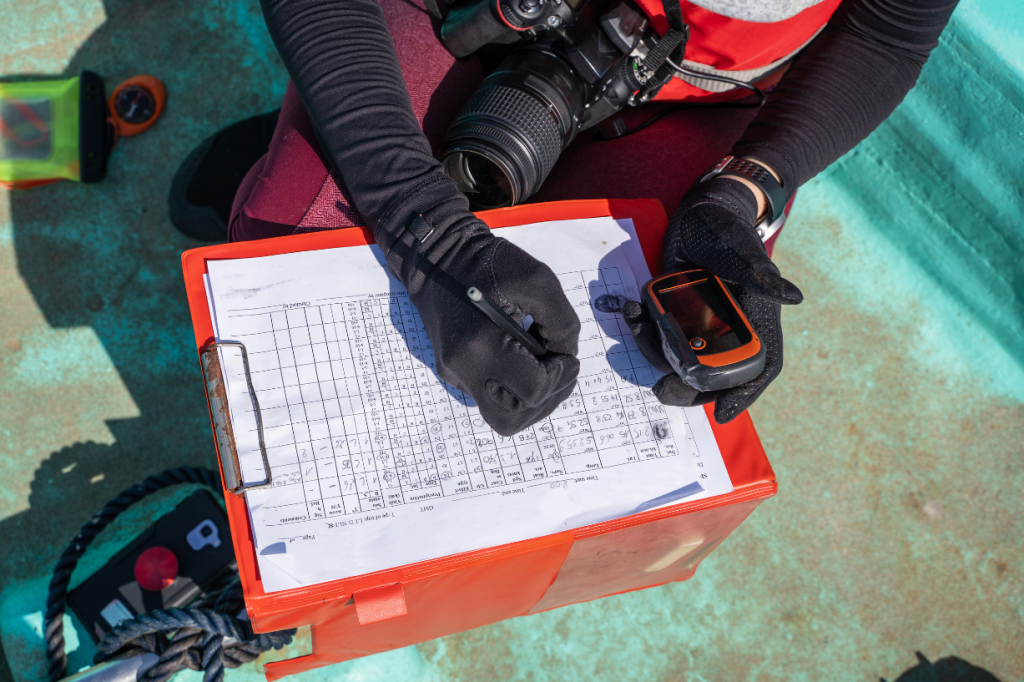
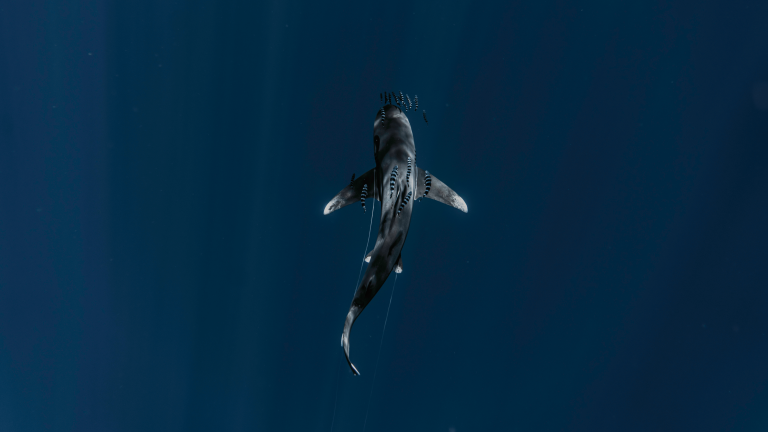
We study how marine animals interact with their environments—tracking populations, movement, and behavior—to address threats to their survival and the health of ocean ecosystems.
Why It Matters
Our work helps conservation leaders and policymakers prevent harmful impacts from human activity, habitat degradation, pollution, and climate change by understanding:
- How many animals are out there, where they live, and how they live
- How changing ocean conditions affect their movement and feeding behavior
- How to reduce negative human-wildlife interactions while supporting sustainable ocean use
Key Focus Areas
Population Biology & Demography
Measuring abundance, distribution, life history traits, and survival of marine mammals, fish, sharks, sea turtles, and seabirds.
Ecosystem Health & Resilience
Studying how marine species respond to short-term changes and predicting impacts from larger shifts like climate change and ocean acidification.
Biogeography & Foraging Ecology
Tracking where marine animals go, what they eat, how they dive, and how environmental change influences these behaviors.
Applied Ecology
Using animals as data collectors to study the ocean and evaluating the success of enhancement and rehabilitation programs on wild populations.
Human-Wildlife Interactions
Promoting best practices to reduce harm from fisheries, pollution, vessel traffic, noise, and marine debris—creating solutions where humans and marine life can coexist.
Animal Tagging & Tracking
Following the movements that matter
What We Do
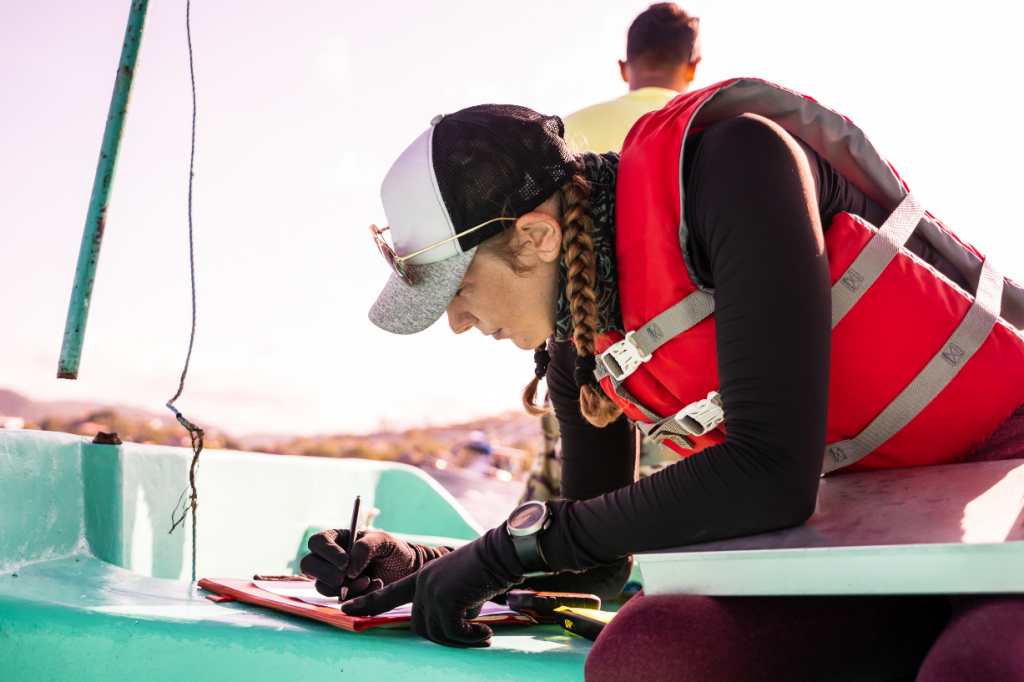
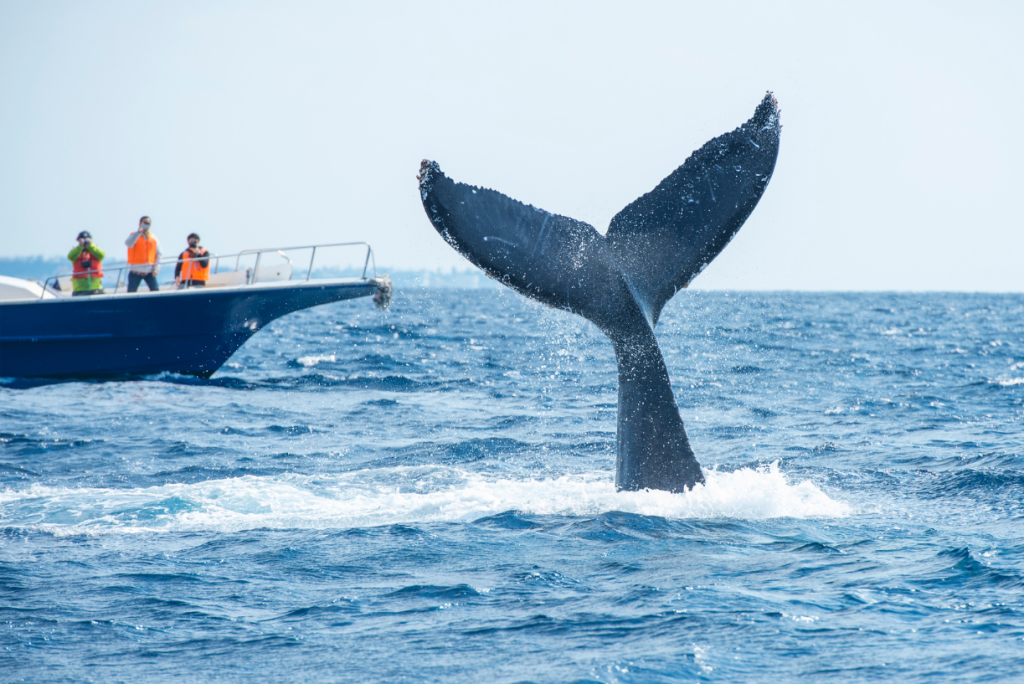
For decades, HSWRI has led cutting-edge efforts to tag and track marine animals—from white seabass and sea turtles to billfish, sharks, and marine mammals. These programs uncover essential insights into animal migration, habitat use, behavior, and survival. Using acoustic, satellite, and archival tag technologies, our scientists monitor how animals move through space and time—and how their movements are influenced by ocean conditions, fisheries, and human activity.
Why It Matters
- Identify essential habitats and migratory corridors
- Evaluate the effectiveness of marine protected areas
- Monitor the impacts of climate change on movement and distribution
- Support sustainable fisheries by informing stock assessments and gear regulations
- Develop international partnerships to conserve highly migratory species
Key Focus Areas
Acoustic Telemetry Networks
Acoustic arrays to track tagged fish and sharks across California and Florida, providing fine-scale data on habitat use and residency patterns.
Satellite Tagging of Highly Migratory Species
Archival and real-time satellite tags on marine mammals, billfish, sharks, and sea turtles reveal large-scale movement patterns across ocean basins, linking coastal and offshore ecosystems.
Tagging for Fisheries Management
Information from tag and otolith returns from recreational and commercial fisheries are integrated into population models to evaluate survival, growth, and fishing pressure.
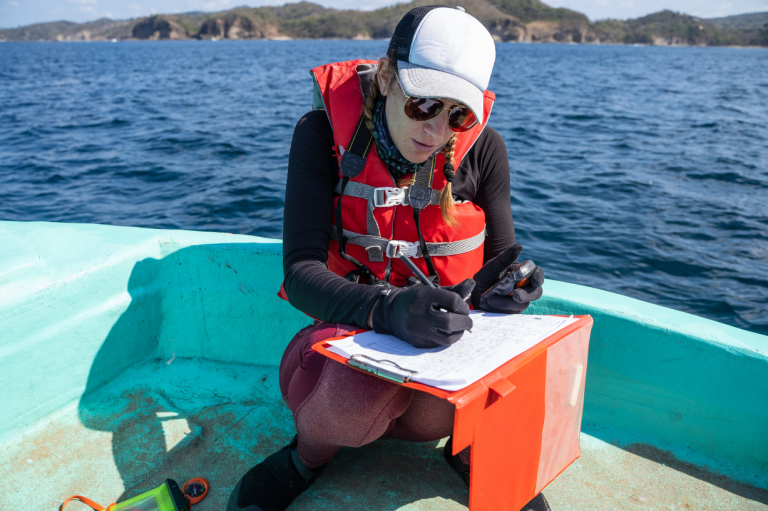
Our Service & Impact
Eastern Florida Coast Covered (since 2002 stranding response)
Marine Mammal Stranding Responses
Recorded Cetacean Stranding Responses
Marine Mammal Health Tools Developed
Recent Projects
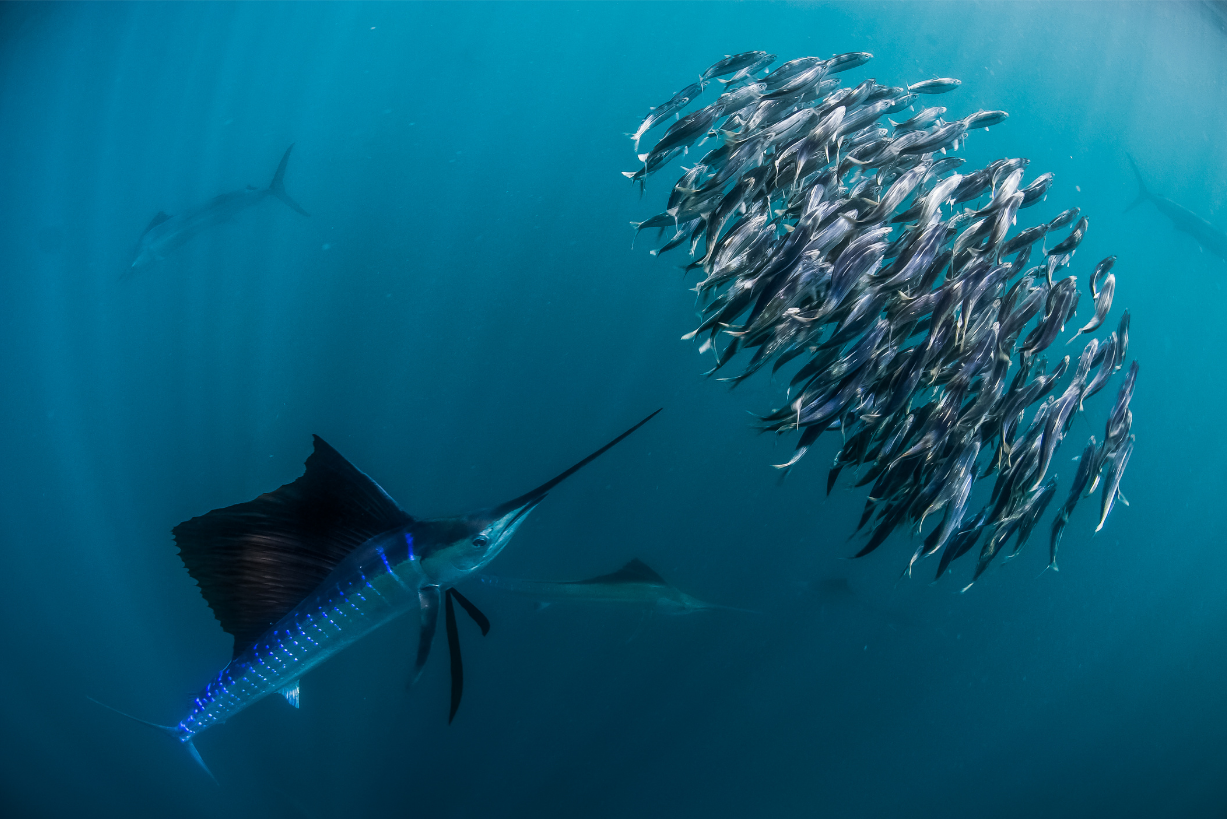
DynaMAR: Dynamic Management of Billfish in the Eastern Tropical Pacific
This project uses satellite tagging to study sailfish and blue marlin movements in the Eastern Tropical Pacific. In collaboration with regional fishers, NGOs, and international partners, Project DynaMAR (Dynamic Marine Animal Research) is investigating how ocean conditions, seamounts, and fisheries influence billfish behavior. The goal is to improve dynamic spatial management tools that protect billfish while maintaining productive fisheries.
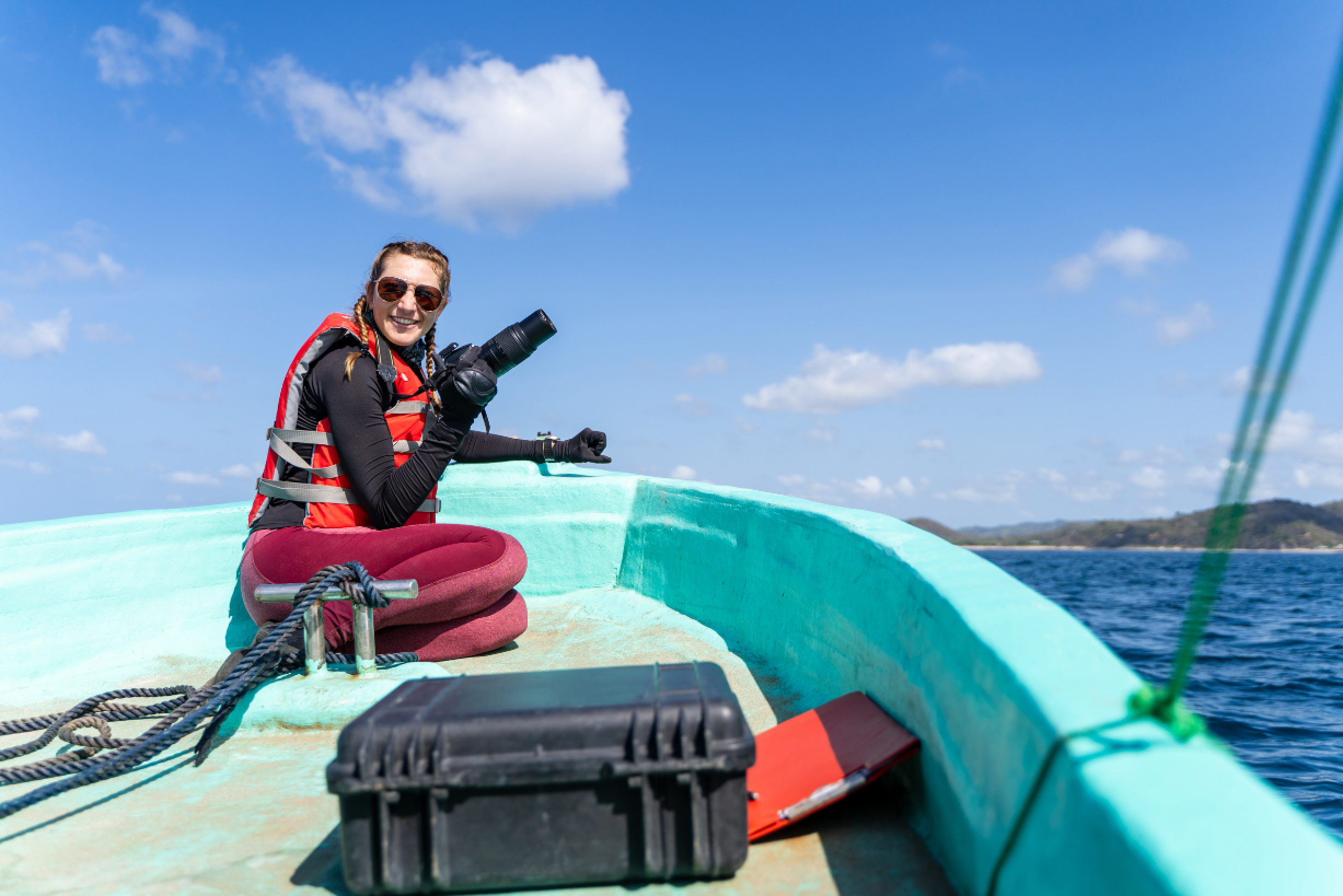
Movement Ecology & Behavior
Our research team uses satellite and acoustic tags to track the movements of marine mammals, sharks, and fish. Combined with oceanographic data, tagging helps us understand how these animals navigate dynamic environments, respond to warming waters, and interact with fisheries. This work supports species-specific conservation and management strategies and advances knowledge of climate impacts on species of concern.
Publications
Demography and population biology of marine vertebrates
Ackley, S. F., J. L. Bengtson, P. Boveng, M. Castellini, K. L. Daly, S. Jacobs, G. L. Kooyman, J. Laake, L. Quetin, R. Ross, D. B. Siniff, B. S. Stewart, I. Stirling, J. Torres, and P. K. Yochem). 2003. A topdown multi-disciplinary framework for examining the pack ice ecosystem of the eastern Ross Sea,Antarctica. Polar Record. 39 (210):219-230. (Cover photo).
Akamatsu, T., D. Wang, K. Wang, S. Li, S. Dong, X. Zhao, Z. Wei, J. Barlow, B. S. Stewart, M. Richlen.2008. Estimation of the detection probability for Yangtze finless porpoises (Neophocoena phocaenoides asiaeorientalis) with a passive acoustic method. Journal of the Acoustical Society of America 123:4403-4411.
Castro, A., B.S. Stewart, S. Wilson, R. Hueter, P. Motta, M. Meekan, B. Bowen, S.A. Karl. 2007. Population genetics of Earth’s largest fish, the whale shark (Rhincodon typus). Molecular Ecology 16:5183-5192.
Curtis, C., B. S. Stewart, S. Karl. 2009 Pleistocene population expansion of Antarctic seals. Molecular Ecology, 18:2112-2121.
Durden, W.N., E. D. Stolen, T. A. Jablonski, S. A. Puckett, and M. K. Stolen. 2017. Monitoring seasonal abundance of Indian River Lagoon bottlenose dolphins (Tursiops truncatus) using aerial surveys. Aquatic Mammals.
Durden, W.N., E.D. Stolen, and M.K. Stolen. 2011. Abundance, distribution and group composition of the Indian River Lagoon bottlenose dolphin, Tursiops truncatus, using an aerial survey. Aquatic Mammals 37: 175-186, DOI 10.1578/AM.37.2.2011.175
Mazzoil, M., Gibson, Q., Durden, W.D., Borkowski, R., Biedenbach, G., McKenna, Z., Gordon, N., Brightwell, K., Denny, M., Howells, E., Jakush, J., Moreland, L., Perna, A., and Caldwell, M. 2020. Spatiotemporal Movements of Common Bottlenose Dolphins (Tursiops truncatus truncatus) in Northeast Florida, U.S. Aquatic Mammals, 46(3): 285-300. doi: 10.1578/AM.46.3.2020.285
Stewart, B. S. 1997. Ontogeny of differential migration and sexual segregation in the northern elephant seals, Mirounga angustirostris. Journal of Mammalogy 78:1101-1116.
Weber, D. S., B. S. Stewart, and N. Lehman. 2004. Genetic consequences of a severe population bottleneck in the Guadalupe fur seal (Arctocephalus townsendi). Journal of Heredity 95:144-153. (Cover photo)
Yochem, P. K., J. R. Jehl, B. S. Stewart, S. Thompson, and L. Neel. 1991. Distribution and history of California Gull colonies in Nevada. Western Birds. 22:1-12.
Ecosystem health and resilience
DeLong, R. L., Antonelis, G. A., Oliver, C. W., Stewart, B. S., Lowry, M. C., and Yochem, P. K. 1991. Effects of the 1982-83 El Niño on several population parameters and diet of California sea lions on the California Channel Islands. Pp. 167-172. In: Pinnipeds and El Niño: response s to environmental stress. (F. Trillmich and K. Ono, eds.). Springer-Verlag, Berlin.
Sleeman, J. C., M. G. Meekan, B. S. Stewart, S. G. Wilson, J. J. Polovina, J. D. Stevens, G. S. Boggs, C. J. A. Bradshaw. 2010. To go or not to go with the flow: Environmental influences on whale shark movement patterns. Journal of Experimental Marine Biology and Ecology, 390: 84-98. (and J. Exp. Mar. Biol. Ecol (2011). 396: 255)
Stewart, B. S., and Yochem, P. K. 1991. Northern elephant seals on the southern California Channel Islands and El Niño. Pp. 234-243. In: Pinnipeds and El Niño: responses to environmental stress. (F. Trillmich and K. Ono, eds.). Springer-Verlag, Berlin.
Tosh, C., N. de Bruyn, J. Steyn, H. Bornemann, J. van den Hoff, B. S. Stewart, J. Plotz, M. Bester. 2015. The importance of seasonal sea-surface height anomalies for foraging juvenile southern elephant seals. Marine Biology 162:2131-2140. DOI 10.1007/s00227-015-2743-4
Biogeography and foraging ecology of marine vertebrates
Ackley, S. F., J. L. Bengtson, P. Boveng, M. Castellini, K. L. Daly, S. Jacobs, G. L. Kooyman, J. Laake, L. Quetin, R. Ross, D. B. Siniff, B. S. Stewart, I. Stirling, J. Torres, and P. K. Yochem. 2003. A top-down multi-disciplinary framework for examining the pack ice ecosystem of the eastern Ross Sea, Antarctica. Polar Record. 39 (210):219-230. (Cover photo).
Bengtson, J. L., and B. S. Stewart. 1997. Diving patterns of a Ross seal (Ommatophoca rossii) near the eastern coast of the Antarctic Peninsula. Polar Biology, 18:214-218.
Durden, W.N., O’Corry-Crowe, G., Shippee, S., Jablonski, T., Rodgers, S. Mazzoil, M. Howells, E., Hartel, E., Potgieter, B., Londono, C., Moreland, L., Townsend, F., McCulloch, S. and Bossart, G. 2019. Small-scale movement patterns, activity budgets, and association patterns of radio-tagged Indian River Lagoon bottlenose dolphins (Tursiops truncatus). Aquatic Mammals, 45(1): 66-87. doi: 10.1578/AM.45.1.2019.66
Hartel, E.F., Durden, W.N., and O’Corry-Crowe, G. 2020. Testing satellite telemetry within narrow ecosystems: Nocturnal movements and habitat use of bottlenose dolphins within a convoluted estuarine system. Animal Biotelemetry, 8,13.
Linzey, D. W., W. Wiltschko, R. Wiltschko, R. K. J. Lohmann, C. M. F. Lohman, and B. S. Stewart. 2003. Migration and navigation (vertebrates). Pp. 252-256, In: McGraw-Hill Yearbook of Science & Technology. McGraw-Hill, New York. 512 pp.
Rossman, S., P.H. Ostrom, M. Stolen, N.B. Barros, H. Gahdhi,, C. A. Stricker, and R.S. Wells. 2015. Individual specialization in the foraging habits of female bottlenose dolphins living in a trophically diverse and habitat rich estuary. Oecologia 178 (2):415-425.
Stewart, B. S. and R. L. DeLong. 1995. Double migrations of the northern elephant seal. Journal of Mammalogy 76:196-205.
Stewart, B. S., G. A. Antonelis, J. D. Baker, and P.K. Yochem. 2006. Foraging biogeography of Hawaiian monk seals in the northwestern Hawaiian Islands. Atoll Research Bulletin 543:131-145.
Wilson, S. G., J. J. Polovina, B. S. Stewart, and M. Meekan. 2006. Movements of whale sharks tagged at Ningaloo Reef, Western Australia. Marine Biology 148: 1157-1166.
Applied ecology
Brillinger, D.R. and B. S. Stewart. 2010. Stochastic modelling of particle movement with application to marine biology and oceanography. J. Statistical Planning and Inference. 140:3597-3607.
Esson, D.W., H.N. Nollens, T.L. Schmitt, K.J. Fritz, C.A. Simeone, B.S. Stewart. 2015. Aphakic phacoemulsification and automated vitrectomy and post-return monitoring of a rehabilitated harbor seal (Phoca vitulina richardsi) pup. Journal of Zoo and Wildlife Medicine. 46:647-651.
Stewart, B. S. Introduction and background on the rescue, rehabilitation, and scientific studies of JJ, an orphaned California gray whale calf. 2001. Aquatic Mammals 27: 203-208.
Stewart, B. S., J. Harvey, and P. K. Yochem. 2001. Post-release monitoring and tracking of a rehabilitated California gray whale. Aquatic Mammals 27: 294-300.
Zagzebski, K.A., F.M.D. Gulland, M. Haulena, M.E. Lander, D. J.Greig, L. J.Gage, M.B. Hanson, P.K.Yochem and B.S. Stewart. 2006.Twenty-five years of rehabilitation of odontocetes stranded in central and northern California, 1977 to 2002. Aquatic Mammals 32:334-345.
Human-wildlife interactions
Durden, W.N. The harmful effects of inadvertently conditioning a wild bottlenose dolphin (Tursiops truncatus) to interact with fishing vessels in the Indian River Lagoon, Florida, USA. 2005. Aquatic Mammals, 31(4): 413-419.
Koehler, H. R., B. S. Stewart, P. Carroll, & T. Rice. 2002. Legal instruments for the prevention and management of disposal and loss of fishing gear at sea. Pp. 330-343, In: Proceedings of the International Marine Debris Conference on Derelict Fishing Gear and the Ocean Enviornment. (N. McIntosh, K. Simonds, M. Donohue, C. Brammer, S. Mason, & S. Carbajal, eds. National Marine Sanctuaries, NOAA).
Li, S., T. Akamatsu, D. Wang, K. Wang, S. Dong, X. Zhao, Z. Wei, X. Zhang, B. Taylor, L. A. Barrett, S. T. Turvey, R. R. Reeves, B. S. Stewart, M. Richlen, and J. R. Brandon. Indirect evidence of boat avoidance behavior of Yangtze finless porpoises. Bioacoustics 17: 174-176.
Noke, W. D. and D. K. Odell. Interactions between the Indian River Lagoon blue crab fishery and the bottlenose dolphin, Tursiops truncatus. 2002. Marine Mammal Science 18: 819-832.
Stolen, M.K., W.N. Durden, T. Mazza, N. Barros, J. St. Leger. 2013. Effects of recreational fishing gear on bottlenose dolphins (Tursiops truncatus) in the Indian River Lagoon system, Florida. Marine Mammal Science 29: 356-364
Turvey, S. T., R. L. Pitman, B. L. Taylor, J. Barlow, T. Akamatsu, L. A. Barrett, X. Zhao, R. R. Reeves, B. S. Stewart, K. Wang, Z. Wei, X. Zhang, M. Richlen, T. Pusser, J. R. Brandon, and D. Wang. 2007. First human-caused extinction of a cetacean species? Biology Letters 3:537-540.
Ylitalo, G. M., M. Myers, B. S. Stewart, P. K. Yochem, R. Braun, L. Kashinsky, D. Boyd, G. A. Antonelis, S. Atkinson, L. A. Woodward, A. Aguirre, and M. M. Krahn. 2008. Organochlorine contaminants in endangered Hawaiian monk seals (Monachus schauinslandi) from four Northwestern Hawaiian Islands subpopulations. Marine Pollution Bulletin. 56:231-244. Doi:10.1016/jmarpolbul.207.09.034.