

Ocean Resources Enhancement & Hatchery Program (OREHP)
Conservation and angling working together
What We Do
The Ocean Resources Enhancement and Hatchery Program (OREHP) is a long-running, science-based effort to restore California’s white seabass population using marine-hatchery-reared juveniles and responsible fishery replenishment protocols.
Established in 1983 by the California Legislature, OREHP is the first state-managed marine fish stocking program in the U.S. Operated by HSWRI in collaboration with the California Department of Fish and Wildlife (CDFW) and supported by the Coastal Conservation Association and their fishing license fees, the program has become a national model for fisheries replenishment.
Why It Matters
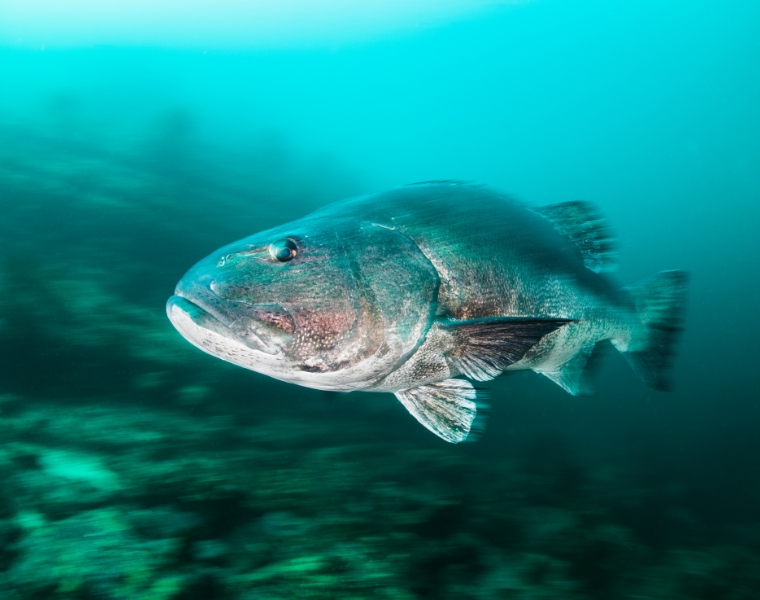
White seabass (Atractoscion nobilis) were once abundant along the Southern California coast, but decades of overfishing and environmental pressure depleted their numbers. OREHP was developed to reverse this trend by culturing juvenile white seabass and releasing them into the wild at strategic locations using volunteers.
The program supports fish population recovery and provides valuable scientific data through tagging, monitoring, and collaboration with user groups and the CDFW.
How It Works
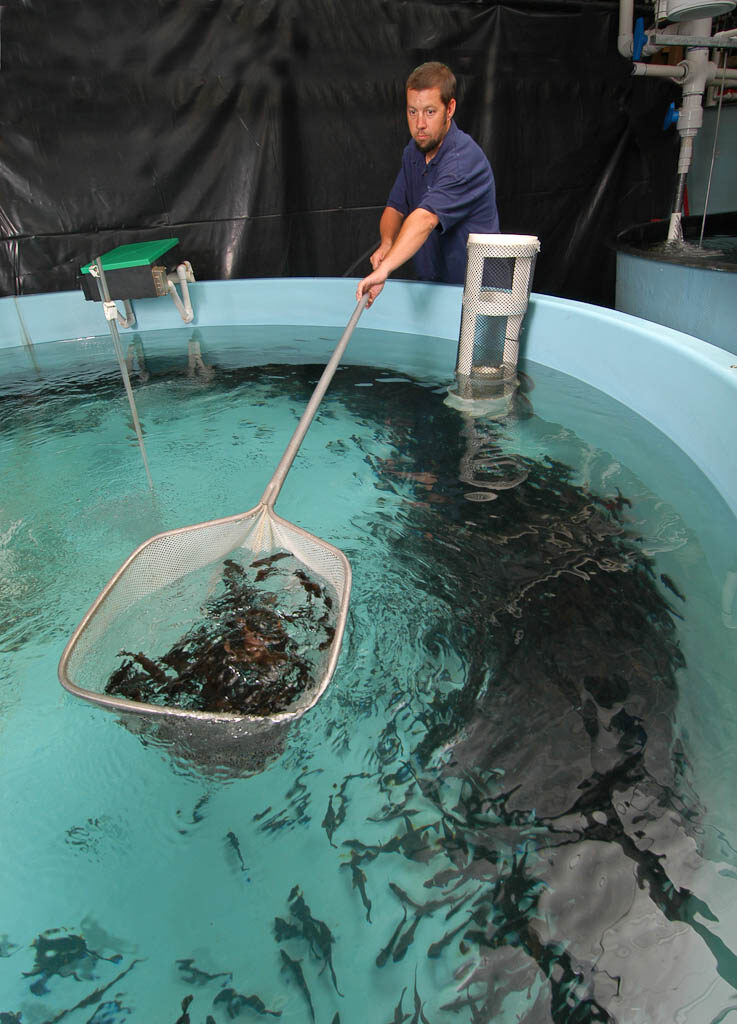
- Broodstock are maintained at HSWRI’s Carlsbad hatchery under controlled conditions.
- Spawning occurs naturally, and fertilized eggs are collected and hatched.
- Larvae and juveniles are reared to ~200mm total length in optimal environments with specialized feed, water quality control, and health screening.
- Coded wire tags are implanted in all fish prior to release for post-release recovery and assessment of survivorship.
- Fish are transported and released by volunteer-run growout facilities at select coastal sites.
- CDFW and HSWRI collaborate on post-release recapture efforts and long-term population tracking.
To date, more than 2.5 million white seabass have been released through this program.
Scientific & Operational Focus Areas
Broodstock management & Genetic Diversity
Health assessments & Disease prevention
Larval & Juvenile rearing protocols
Tagging, tracking, and data recovery methods
Habbitat suitability & Release site modeling
Collaborative management with recreational anglers resource managers, & academic partners
Impact & Legacy
OREHP has set the precedent for science-informed marine enhancement. Its success has laid the groundwork for expanding HSWRI’s fisheries replenishment model to other species through the Dick Laub Fisheries Replenishment Program (DLFRP). Ongoing monitoring, adaptive management, and strong stakeholder partnerships keep the program relevant and responsive to evolving environmental and fishery dynamics.
Current Publications
Gruenthal, K.M., B.J. Gauger, and M.A. Drawbridge.
2014. Maternal reproductive exhaustion in a broadcast spawning marine finfish cultured for conservation. Aquaculture 422-423:129-135.
Hervas, S., K. Lorenzen, M.A. Shane, and M.A. Drawbridge.
2010. Quantitative assessment of a white seabass (Atractoscion nobilis) stock enhancement program in California: post-release dispersal, growth and survival. Fisheries Research 105: 237–243.
Gruenthal, K.M., and M.A. Drawbridge.
Toward responsible stock enhancement: broadcast spawning dynamics and adaptive genetic management in white seabass aquaculture. Evolutionary Applications 5:405-417.
Frequently Asked Questions
What is the main goal of OREHP?
The purpose of OREHP is to investigate the potential for proactively counteracting the depletion of California’s coastal marine fisheries by stocking cultured fish.
How can I participate in releasing hatchery-reared fish?
How successful has the program been so far?
To date, over 2.8 million hatchery-reared white seabass have been released.
Does the program have negative effects on wild fish populations?
OREHP uses rigorous, science-based protocols to minimize ecological impacts and promote genetic diversity, ensuring responsible fisheries enhancement.
What funding sources support OREHP?
The program is supported primarily by California fishing license fees, partnerships with CDFW, Coastal Conservation Association, grants, and donations.
Can hatchery-reared fish reproduce successfully in the wild?
Yes, hatchery-reared white seabass have been documented reproducing naturally in the wild, indicating successful integration into the population.
Where are the fish released?
Juvenile seabass are released from volunteer-run grow-out pens strategically located along the Southern California coast to maximize survival and integration.
How long does it take to rear a fish before it’s released?
Fish are typically reared to about 180–200 mm (around 7–8 inches) in length. This process usually takes 6 to 9 months, depending on water temperature, growth rates, and other environmental conditions.
How do you track the success of released fish?
Each fish is implanted with a coded wire tag before release, allowing scientists to monitor growth, survival rates, and migration patterns over time. Anglers play a critical role in tracking the success of this program by turning in tagged white seabass heads. These returns help us gather essential data to improve future releases. To find a head drop-off freezer near you, please visit [OREHP Drop-Off Locations].